Well, we now have it on record. During the Makerfield by-election campaign, both Andy Burnham (Labour) and Robert Kenyon (Reform) pledged to revitalise the constituency’s high streets. At the Manchester Evening News hustings, Andy Burnham said that success by the end of his term would mean having “revitalised” the town’s high streets. Rob Kenyon, meanwhile, spoke of “sorting out” the high streets.
At The Wiganist, we have one central idea for restoring our high streets: it must begin with the restoration of the rule of law.
Reporting by the BBC and The Guardian is now confirming what many have long suspected. Too many of our high streets have become a front for organised crime. As The Guardian put it, there are “dodgy retail outlets such as vape stores, barbers, mini-marts and sweet shops suspected of being used to launder [criminal money]”.
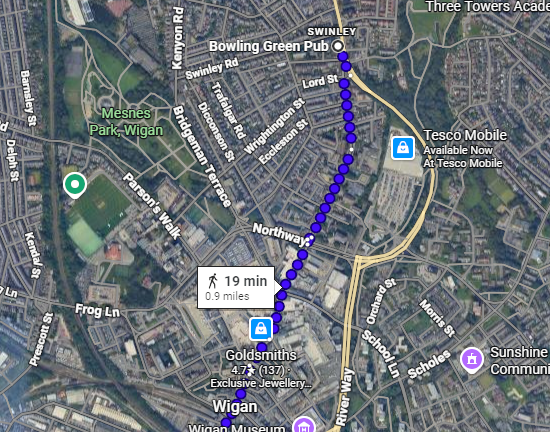
And by sheer coincidence, what do we now find on Wigan’s main high street, from Wallgate to the top of Wigan Lane? A thriving economy built around barbers, vape stores and sweet shops. Indeed, a casual glance at Google Maps reveals the remarkable choice of eight barbers along that one-mile stretch alone (June 2026). The Wiganist is sceptical but apparently Wiganers now show more interest in visiting barbers than pie shops.
Interestingly, many of these beloved entrepreneurs appear to have little interest in the digital economy, preferring cash-in-hand transactions. They also seem to struggle with the tax system. Or with competing fairly against legitimate, tax-paying small businesses. As the National Crime Agency (NCA) has warned: “This criminal activity makes our communities less safe and less prosperous. It undermines legitimate business, deprives public services of tax revenues, and fuels a range of predicate offences such as the drugs trade, illicit goods, trafficking, and organised immigration crime.”
Now, if Labour or Reform are serious about “revitalising” and “sorting out” our high streets, they must give the police and enforcement agencies the resources needed to dismantle organised crime networks across the country. At present, the National Crime Agency has been allocated £30 million to tackle the problem. High streets need real, sustained investment, alongside proper enforcement of the law. £30 million may sound like a substantial sum, but it is little more than a rounding error compared with overall public spending. The scale of the problem demands a serious and well-funded response. If you suspect there has been no genuine attempt to confront the issue, you are probably right. Given that Wigan Council lacks the powers to address it directly, it is vital that both local and national law enforcement agencies treat the matter with far greater urgency.
If Andy Burnham wins in Makerfield and then goes on to become Prime Minister in 2026—or even if he loses and remains Mayor until 2028—a genuinely popular policy would be to take on organised crime on our high streets. Mr Burnham, in particular, often speaks about “pride in place”. The Wiganist‘s response is simple: pride in place starts with restoring the rule of law.